Friday, March 30, 2012

Monthly Roundup - March 2012

March - another birthday come and gone and the first hint of Autumn in the air. The month began quietly and then last week Hubby had an accident and smashed up his left hand which meant the rest of the week in hospital . Home now recuperating but will be out of action for at least another 6 weeks so our normal routine has become a bit chaotic as we adjust.

Books Read in March = 15
Italics are from my bookshelf or on my Kindle

A Duty to the Dead by Charles Todd
'have the men had enough' by Margaret Forster
Guard a Silver Sixpence by Felicity Davis (NF)
The Tenant of Wildfell Hall by Anne Bronte (Classics Challenge March Prompt)
The Third Miss Symons by F.M.Mayor
Fortune's Daughters by Elizabeth Kehoe (NF)
The Circular Staircase by Mary Roberts Rinehart
The Year After by Martin Davies
The Roundabout Man by Clare Morrall
Mrs Milburn's Diaries
The Observations by Jane Harris
The Lantern by Deborah Lawrenson
The House at Sea's End by Elly Griffiths
My Dear I Wanted To Tell You by Louisa Young
Foal's Bread by Gillian Mears 

Clarissa in Marchprogress update for the year-long group read.

Fiction = 12
Non-Fiction = 3
Library Books = 12
E-books = 2
Off my Shelf = 1
Added to Shelf = 2 bought

Westwood by Stella Gibbons
Excellent Women by Barbara Pym
DNF = 3
Perfect People by Peter James.....this is not one of his Roy Grace crime series books which I always enjoy but a standalone and for me too much scientific stuff about genetics prevented me from getting involved in the story.
The Falls by Joyce Carol Oates.......I give up on this author!!
Valley of the Dolls by Jaqueline Susann......I thought it would be fun to reread this but 30 pages in I was bored and gave up.

Kerrie @ Mysteries in Paradise has introduced a new meme for bloggers who post a monthly review to add a Crime Fiction Pick of the Month. 


I only read three crime fiction books this month and my pick from those is....  


New from Netgalley......two non-fiction


Mrs Robinson's Disgrace: The Private Diary of a Victorian Lady by Kate Summerscale
Rose: My Life in Service to Lady Astor by Rosina Harrison

The Classics Club is a wonderful idea from Jillian @ A Room of One's Own  and one I am really excited to be part of. Participants commit to reading a  number of classics in a certain time from a list chosen by themselves.
I've begun with a list of 60 titles to be read in 5 years which may change as I go along. The page under the header will chart my progress and I hope to make big inroads during...


 A Victorian Celebration - hosted by Ally @ A Literary Odyssey this event is being held during June and July . The goal is to read as many books as you like from the Victorian era (1837 - 1901). 


Looking ahead to April


With Easter next weekend followed by the school holidays and visiting grandchildren I'm not making any plans for April. I'll read when I have time and blog when I have time and just take things as they come.


I hope you all have a wonderful April!


Tuesday, March 27, 2012

I've been reading

With last week's domestic drama and now a recuperating husband on my hands I've put all serious reading aside for the present and choosing books that are light, relaxing and require little concentration. Which means I'm getting through them quickly so in order to keep up I'm doing a few quick mentions.  


 The Observations by Jane Harris

Scotland, 1863. Escaping her not-so-innocent past, Bessy Buckley takes a job as a maid in a country house. Bessy is intrigued by her new employer, Arabella, but puzzled by her insistence that Bessy keep a journal of her most intimate thoughts. And it seems that Arabella has a few secrets of her own - including her obsessive affection for a former maid who died in mysterious circumstances.

Bessy is the narrator - she's earthy, bawdy and vulgar . A sort of Victorian Gothic tale of suspicions and secrets, mysterious disappearances and ghostly happenings, it romps along in a delightfully entertaining way. I liked it a lot but not as much as Jane Harris's second novel Gillespie and I which I read and loved last year. 
I Want More Challenge


The Lantern by Deborah Lawrenson

When Eve falls for the secretive, charming Dom, their whirlwind relationship leads them to purchase Les Genevriers, an abandoned house in a rural hamlet in Provence. As strange events begin to occur, Eve's narration becomes entangled with that of Benedicte Lincel, a girl who lived in the house decades before.


Lovely, evocative descriptions of Provence were the highlight of this book which brought back memories of our stay there in 2001. It made pleasant weekend reading but there was nothing particularly original about the story and I'm not convinced it deserved all the attention it received last year.


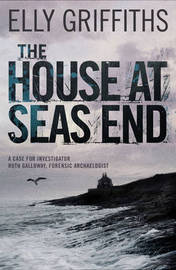
The House at Sea's End by Elly Griffiths

A team of archaeologists investigating coastal erosion unearths six bodies buried at the foot of a Norfolk cliff. Forensic tests show that the bodies have lain hidden in the sand for over fifty years. Further discovery reveals that members of the local wartime Home Guard may be concealing a hideous crime.

This series featuring forensics expert Ruth Galloway is one I really enjoy and because it focuses on character development as much as the central mystery, I'm am very glad I've read them in order. This is the third - Ruth has had her baby and is struggling to cope with the needs of the daughter she loves and the guilt she feels about going back to the work she also cares so much about.
Solving the mystery of the bodies provides a fascinating glimpse at wartime history and the effect of war on people. 
A secondary theme is introduced when Ruth's friend Tatjana comes to visit and painful memories of her time in Bosnia identifying mass grave victims resurface.
Good reading for crime fiction lovers!


Monday, March 26, 2012

The Roundabout Man by Clare Morrall

I loved it!

A review of The Roundabout Man at Fleur Fisher caught my attention and I requested it from the library. I wasn't sure if it was quite my sort of book but I was so wrong and it's definitely one of my favourite reads so far this year.

Most people in their fifties wanting to get away from their ordinary life and seeking peace and quiet would opt for a cottage hideaway in France or a mountain top in Tibet to meditate on. Not Quinn......he tows his caravan into the centre of a busy roundabout where he lives ' in the eye of the storm', alone with the trees and the birds, while the rest of the world spins around him. He isn't a tramp even though he survives on the leftovers from a nearby motorway service station and  entertains the customers at the laundromat with stories so they will include his washing with theirs. Quinn is content with his life.

Then a young reporter discovers his hideaway, decides he will make a good story, and writes an article for the newspaper. The repercussions of this invasion of privacy not only bring Quinn back out into the world but also force him to face his past and the uncomfortable truths and secrets it holds about himself, his sisters, and his mother.

What he hopes no one will discover is that he is THE QUINN , immortalised as a child by his mother in her entrancing tales about a little boy's adventures with his triplet sisters. She wrote of a perfect and loving family but the reality was she was detached and indifferent to her children and the succession of foster children that came and went throughout Quinn's childhood.

I think this is a book that will particularly appeal to older readers - those who were raised on Enid Blyton will hear echoes of the Famous Five and their 'lashings of ginger beer' in the excerpts from Quinn's mother's books. The author also captures the reticence of 50's parents, the reluctance to confide, inform or explain to children because they didn't need to know.

It's hard to pinpoint why I enjoyed The Roundabout Man so much. There isn't really a plot and the story wanders from present to past but the nostalgia and the interesting characters made for delightfully different reading.


Thursday, March 22, 2012

Library Loot

Library Loot is a weekly event co-hosted by Marg @ The Adventures of an Intrepid Readerand Claire @ The Captive Reader that encourages bloggers to share the books they have checked out from the library.   


I'm a day later than usual but the Man of the House is in hospital so nothing is running to the normal routine. A quick dash to the library this afternoon where I managed to fill the loot bag from the returns shelf in a very short time.


My Dear I Wanted to Tell you by Louisa Young.......another WWI story - the title makes me think this might be a tear-jerker!
Tides of War by Stella Tillyard......historical fiction - Regency London and Spain during the Peninsular War. Longlisted for the Orange prize.
The Translation of the Bones by Francesca Kay - " when word gets out that Mary-Margaret O'Reilly may have been witness to a miracle, religious mania descends on the Church of the Sacred Heart in Battersea." Another one longlisted for the Orange Prize.


The Lantern by Deborah Lawrenson.........I became so tired of hearing about this book last year I cancelled the hold I had on it. Now things are quieter I can sit back and enjoy it.
The House at Seas End by Elly Griffiths.........'A team of archaeologists investigating coastal erosion unearths bodies at the foot of a Norfolk cliff'.....the third in the series featuring forensics expert Ruth Galloway.
Foal's Bread by Gillian Mears........Set in Australia it's the story of two generations of the Nancarrow family and their battle with the land and the rural high-jumping circuit.

Wednesday, March 21, 2012

The Circular Staircase by Mary Roberts Rinehart

“But being an unmarried woman, with the handicap of my sex, my first acquaintance with crime will probably be my last. Indeed, it came near enough to being my last acquaintance with anything.” 

Middle-aged maiden aunt Rachel Innes is persuaded by her niece and nephew, Gertrude and Halsey, to rent a house in the country for the summer. She moves in with her maid, Liddy, and on the second night a man is found murdered , the beginning of a series of very strange events and more unexplained deaths.

Rachel makes a delightful narrator. A sensible but stubborn woman she also has a keen sense of humour and I particularly enjoyed the interaction between her and the nervous and prone-to hysterics Liddy. I don't imagine that in that era it was quite the done thing to call one's maid a best friend but after decades together and knowing each other inside out, that is what they are.

Published in 1908 I was surprised at the clear and simple writing style so unlike the wordiness of  many Victorian/Edwardian authors. The story romps along non-stop through an endless variety of scenarios - spooky knocking in the walls at night, secret passages, bank fraud, kidnapping and abandoned children. There's never a dull moment and it's makes very entertaining reading.

The first book I've read by this popular vintage mystery author and it won't be the last.


Vintage Mystery Reading Challenge - Golden Girls

Saturday, March 17, 2012

The Year After by Martin Davies

December, 1919.......Tom Allen has taken his time returning to England after five years fighting in France. He is one of the 'lucky' few who emerged physically unscathed although he carries the inner scars of what he has been through and the heavy burden of being a survivor.

Uncomfortable and unsettled in London he accepts an invitation to spend Christmas at Hannesford Court, the country house where he spent many summers before the war and to which he had vowed he would never return. 

It's almost as if nothing has changed. Cards in the library after dinner. The Boxing Day shoot. The New Year ball. Margot!

And Tom has not forgotten the German professor who died suddenly that last year. He begins to question: during all those years observing the glittering life of the owners of Hanneford, how much did he really see or understand? 

The Year After has a mystery at its heart but it is also a very moving story about love and loss. About a nation of people suffering from shock and grief in the immediate aftermath of WWI. Of survivors struggling to maintain things the way they have always been and not yet comprehending that can never be. 
The author's beautiful evocative prose captures perfectly the sunshine and roses, the lighthearted gaiety of the summer of 1914 and contrasts it with the bitter cold and icy landscape of the winter of 1919.
The villagers and the guests gathered at Hannesford for Christmas reflect the attitudes and opinions of different sections of society..
" 'Those of us who went out there want to forget all about the blasted war. Those who stayed here are determined not to let anyone forget it. Suddenly all the men who died are heroes, but the ones who came back are ungrateful fellows who get a bit moody and a bit awkward and rather let the side down.' "
" 'He (the Vicar) doesn't want Hannesford to have its own memorial to the fallen.''The vicar wants to spend the money on the village school. You know the sort of thing.Education for the children of heroes.' "
" ' My generation of young women find themselves in peculiar circumstances. A very large number of us will never marry. We may as well be frank about the situation. It is a simple question of mathematics.' '
" ' Did you notice all those photographs, Anne. When we went around the village on Christmas Day? A picture on every mantelpiece, the same in every village around the moor, like a thousand tiny lights still burning.' "
Compelling and emotional reading! I recommend.


Friday, March 16, 2012

A Victorian Celebration


 "The Victorian era in literature refers to the time that Queen Victoria was ruling in Britain (1837-1901). It was a time period of great peace and prosperity for Britain and allowed for a lot of artistic and literary expression. Generally speaking, Victorians are only the British authors who published during this time period. However, some like to group American writers and others into the mix since their work can be closely tied together.

To give you an idea of what writers I am talking about, some of the most well-known Victorian writers include: Charles Dickens, George Eliot, Wilkie Collins, William Makepeace Thackeray, Anthony Trollope, and the Bronte sisters. Others include Lewis Carroll, Robert Louis Stevenson, Anna Sewell, and the Brownings. There are countless more, but these are the big hitters and those most commonly referred to as Victorians. 

For this event, the goal is to read as many Victorian pieces as you wish during the months of June and July. I will have posts going up throughout the event on different authors, as well as my own reviews on Victorian pieces and biographies of writers. There will also be prizes (lots of them) that will go up throughout the two month event. If you are going to participate, you can read a novel from the era, a biography on a writer or Queen Victoria herself, or anything else pertaining to the era. All posts will help you qualify for prizes, which I'll explain as we get closer to the event's starting line!"


This event has been on the horizon for some time and it's one I'm really looking forward to. Some of the books I hope to read ( always subject to change) are:

Our Mutual Friend or Bleak House by Charles Dickens
The Mayor of Casterbridge by Thomas Hardy
The Mill on the Floss by George Eliot
Wives and Daughters or Mary Barton by Elizabeth Gaskell
The Dead Witness: A Connoisseur's Collection of Victorian Detective Stories edited by Michael Sims
Charles Dickens (biography) by Jane Smiley
Elizabeth Gaskell: a habit of stories (biography) by Jenny Uglow

Interested in participating? Signup here.

Thursday, March 15, 2012

A Classics Challenge - March Prompt

This month's prompt - Setting


Choose a setting within the novel that most intrigues you. Is it the house of the character? Maybe the place where the novel reaches its climax?  


The Tenant of Wildfell Hall by Anne Bronte


'My father, as you know, was a sort of gentleman farmer in -----shire;'
The opening lines of chapter 1 establish clearly the rural setting. Anne Bronte never fully identifies place names but it's obvious she's writing about the countryside she was so familiar with and loved so well - the dales, fells and moors of Yorkshire.
" To this end, I left the more frequented regions, the wooded valleys, the cornfields, and the meadow lands, and proceeded to mount the the steep acclivity of Wildfell......................as you ascend, the hedges become scanty and stunted......rough stone fences, partly greened over with ivy and moss. The fields, being rough and stony and wholly unfit for the plough were mostly devoted to the pasturing of sheep and cattle."
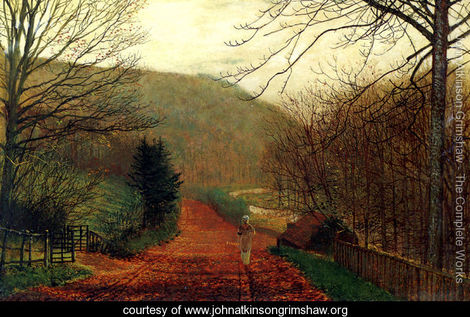
The Haunted House by John Atkinson Grimshaw
"Wildfell Hall, a superannuated mansion of the Elizabethan era, - venerable and picturesque to look at, but doubtless, cold and gloomy enough to inhabit, with its thick stone mullions and little latticed panes, its time-eaten airholes, and its too lonely, too unsheltered position."
The narrator, Gilbert Markham, is a farmer and the description of his daily and seasonal activities on the land, the planting and harvesting , the horse-drawn ploughs and the women reaping in the fields , bring the pre-mechanisation rural time period vividly to life. 


The Harvesters by John Atkinson Grimshaw
The Markhams live about five miles from the sea and in the early summer they plan a picnic day there with family and friends. The older members travelled by carriage while the rest of the party walked.
Forge Valley near Scarborough by John Atkinson Grimshaw
"I have a very pleasant recollection of that walk, along the hard, white, sunny road, shaded here and there with bright green trees,and adorned with flowery banks and blossoming hedges of delicious fragrance; or through pleasant fields and lanes, all glorious in the sweet flowers and brilliant verdure of May."
Scarborough c. 1840s - artist unknown
"...on gaining the summit of a steep acclivity, and looking downward, an opening lay before us - and the deep blue sea burst upon our sight! - deep violet blue - not deadly calm, but covered with glinting breakers - dimunitive white flecks twinkling on its bosom, and scarcely to be distinguished by the keenest vision, from the little sea-mews that sported above, their white wings gliitering in the sunshine:"
 Anne Bronte loved the sea and her favourite place, and where she is buried, was Scarborough which no doubt provided the inspiration for the picnic venue.


Her love and enthusiasm for the places she's writing about in the first half of the book really shines through and adds a wonderful background to the story. While the course of that story could be told against another setting it wouldn't be the same.


John Atkinson Grimshaw ( 1836-1893) was a Yorkshire artist. He had a home outside Leeds and another at Scarborough. Many of his paintings would have been familiar scenes to Anne Bronte.


Saturday, March 10, 2012

A Duty to the Dead by Charles Todd

At the outbreak of WWI, independent-minded Bess Crawford follows in her officer father's footsteps and volunteers for duty. She serves in the nursing corps and goes from the battlefields of France to the doomed hospital ship Britannic. On one voyage she grows fond of the young, gravely wounded Lieutenant Arthur Graham and promises to deliver a message to his brother after his death.

But when Bess arrives at the Graham house in Kent, Jonathan Graham listens to his brother's last wishes with surprising indifference. Unsettled by this, Bess is about to take her leave when sudden tragedy envelops her. She quickly discovers that fulfilling this duty to the dead has trust her into a maelstrom of intrigue and murder that will endanger her own life and test her courage as not even war has.


A Duty to the Dead is the first in the series featuring Bess Crawford by the American mother/son duo who write as Charles Todd. I've enjoyed several of the Ian Rutledge series and am always surprised at how well they create such an evocative English atmosphere.

Bess Crawford is one of the new type of women who would emerge after WWI. She's practical and independent and perfectly capable of looking after herself. She becomes involved in the mystery surrounding Arthur Graham's brother, not because she has any desire to be a sleuth but from a natural curiosity and a strong  dislike of injustice.

The story begins with the sinking of the Britannic which leaves Bess with a broken arm, symbolic of so much  that has been broken, physically , mentally and emotionally. In the quiet Kentish village she visits, the occupants mourn the fathers and sons who will never return and struggle to cope with the maimed and shell-shocked victims who have come back. The vicar ....
"...mended his church because he couldn't mend the broken lives and minds brought to him for comfort."
 I really liked the historical background and the many secondary characters who added depth and interest to the story. The mystery had enough twists to hold my attention - easy, pleasant reading and I enjoyed it.


Friday, March 9, 2012

The Classics Club

Hosted by Jillian @ A Room of One's Own
this is not a challenge but a book club with the idea that participants commit to reading a  number of classics in a certain time from a list chosen by themselves.


My Goal: To read 60 (maybe more) books in five years from the following list.  This list, compiled rather quickly and which I've tried to make as varied as possible is subject to change & growth as I go.I would like more Aus/NZ classics but I need to seek out some I haven't read. If at any time I feel my progress needs rewarding I shall treat myself to a book on my list. I've also created a page for easy access to my list which will have the links to my blog posts.
Start date: 9 March, 2012
Finish date: 9 March, 2017


Persuasion by Jane Austen
Clayhanger by Arnold Bennett
Lady Audley's Secret by Mary Elizabeth Braddon
The Mists of Avalon by Marian Zimmer Bradley (reread)
Agnes Grey by Anne Bronte
Possession by A S Byatt
My Antonia by Willa Cather
Death Comes for the Archbishop by Willa Cather
Wild Swans by Jung Chang
No Name by Wilkie Collins


The Vet's Daughter by Barbara Comyns
Diary of a Provincial Lady by E M Delderfield
Our Mutual Friend by Charles Dickens
Bleak House by Charles Dickens
Middlemarch by George Eliot
The Mill on the Floss by George Eliot
Birdsong by Sebastian Faulks
Howard's End by E M Forster
Mary Barton by Elizabeth Gaskell
Wives and Daughters by Elizabeth Gaskell


Westwood by Stella Gibbons
The Yellow Wallpaper & Other Stories by Charlotte Perkins Gilman
The Odd Women by George Gissing
The Mayor of Casterbridge by Thomas Hardy
Jude the Obscure by Thomas Hardy
The House of the Seven Gables by Nathaniel Hawthorne
A Farewell to Arms by Ernest Hemingway
South Riding by Winifred Holtby
The Kite Runner by Khaled Hosseini
Les Miserables by Victor Hugo


The Godwits Fly by Robin Hyde
Washington Square by Henry James
Three men in a Boat by Jerome K Jerome
Strangers and Wayfarers by Sarah Orne Jewett
The Victorian Chaise-Longue by Marghanita Laski (novella)
Lonesome Dove by Larry McMurtry
Short stories by Katherine Mansfield
The Third Miss Symons by F M Mayor (novella)
A House for Mr Biswas by V S Naipaul
The Harp in the South by Ruth Park


Excellent Women by Barbara Pym
?? by Muriel Spark
East of Eden by John Steinbeck
Dracula by Bram Stoker
Vanity Fair by William M Thackeray
??? by Angela Thirkell
Barchester Towers by Anthony Trollope
The Way We Live Now by Anthony Trollope
With Anthony Trollope in New Zealand (NF)
Kristin Lavransdattar by Sigrid Undset


The Enchanted April by Elizabeth Von Arnim
Daddy Long Legs by Jean Webster (novella)
The Return of the Soldier by Rebecca West
???? by Dorothy Whipple
The House of Mirth by Edith Wharton
Mrs Dalloway by Virginia Woolf
The Shadow of the Wind by Carlos Ruiz Zafon


Thursday, March 8, 2012

'have the men had enough?' by Margaret Forster

I'm training my library eyes to look in a different way. To ignore the bright and shining new covers and seek out older, shabbier and well-read titles from the 20th century that will help me fill the gaps in the Century of Books project. This was one of my finds and I can only hope there will be many more as good as this proved to be.

Grandma has rapidly progressing senile dementia. The once tough, witty and self-reliant woman has had to be moved from her home in Glasgow to be nearer her family. She has always put her menfolk first, always been the carer, but now must let them care for her.
Grandma has three children....

  • Martin who thinks she should have put straight into a Home and refuses to have anything to do with her care. Nor will he allow his children to visit in case they are frightened.
  • Bridget who was the least favoured child now lavishes love on her mother with the certainty that she will get better. She is single, a nurse working shifts and a lover - Bridget is not always there when needed.
  • Charlie pays the bills but tries to stay emotionally detached and seems unable to make decisions as to Grandma's future.
The story is narrated alternately by Charlie's wife, Jenny, and his daughter, Hannah. Jenny has never got on with her mother-in-law but it is on her shoulders that most of the care-giving falls. She becomes increasingly tired and worried as she struggles to look after her home and family while being on constant call to aid Grandma. Jenny is the only one who is willing to confront the reality of Grandma's future and to take steps to towards what needs to be done. 
Hannah is seventeen - beneath the cheek she gives her Grandma and the disgust she feels at her lack of table manners and her embarrassing incontinence lies a compassionate heart and she is always willing to lend a hand. She is also very observant and constantly questions what is happening around her.
"I think if Bridget brings Grandma out (of hospital) and gives up her own job, goes onto Social Security to look after her, then she is mad. The question is: is it better to be mad or is it better to be sane and cruel?"
I do think this is a book that will be most appreciated by anyone whose life has been touched by the loss of a loved one to dementia.
It's brilliance lies in this being a very ordinary family and so very easy to relate to on an emotional level. The different attitudes of the characters are recognisable, as are the small, day to day happenings that create such frustration and despair. If all this sounds a bit depressing, it's not! Margaret Forster writes with insight about  one of life's sad and painful experiences but she does it with a great deal of humour and I laughed a lot.
Memorable and thought-provoking!

Wednesday, March 7, 2012

Library Loot

Library Loot is a weekly event co-hosted by Marg @ The Adventures of an Intrepid Readerand Claire @ The Captive Reader that encourages bloggers to share the books they have checked out from the library.  


I'm going through one of those horrid times when nothing I start reading seems to really draw me  in and I have books everywhere with bookmarks in them but finding it hard to settle with any one of them. So I carried home some more to add to the confusion! Two fiction...

The Falls by Joyce Carol Oates.........'a newly-wed man climbs over the railings and plunges into Niagara Falls.' I am promising myself that this is the very last time I attempt to finish a JCO. Those I've started before I haven't finished, haven't liked them at all and I have the feeling this much acclaimed author is not for me but we'll see.
The Year After by Martin Davies........' A pacy confection of history, mystery and romance' set in the year following the end of WWI. I couldn't resist this cover!

Two non-fiction

Mrs Milburn's Diaries by Clara Emily Milburn: An Englishwoman's day to day reflections 1939-1945. Claire had this one in her loot last week and I thought it sounded interesting.
Fortune's Daughters by Elisabeth Kehoe........the extravagant lives of the Jerome sisters - Jennie Churchill, Clara Frewen and Leonie Leslie.

What's in your loot this week?


Saturday, March 3, 2012

Weekend Cooking - 'have the men had enough?'

Weekend Cooking hosted at Beth Fish Reads is open to anyone who has any kind of food-related post to share: Book (novel, nonfiction) reviews, cookbook reviews, movie reviews, recipes, random thoughts, gadgets, quotations, photographs.

Excerpts from two very different books I'm reading but both touching on the same theme.


The Tenant of Wildfell Hall by Anne Bronte.......the doctrine of Mrs Markham....
"...in all household matters, we have only two things to consider, first, what's proper to be done, and secondly, what's most agreeable to the gentlemen of the house - anything will do for the ladies."
Daughter Rose to her brother.... 


".....-we can't do too much for you - it's always so - if there's anything particularly nice at table, Mama winks and nods at me, to abstain from it, and if I don't attend to that, she whispers, ' Don't eat so much of that, Rose, Gilbert will like it for his supper' -- I'm nothing at all..............in the kitchen it's - ' Make that pie a large one, Rose, I daresay the boys will be hungry; - and don't put so much pepper in, they'll not like that' - or - 'Rose, don't put so many spices in the pudding, Gilbert likes it plain,' - or ' Mind you put plenty of currants in that cake, Fergus likes plenty.' If I say ' Well Mamma,I don't,' I'm told I ought not to think of myself." p57


'Have The Men Had Enough?' by Margaret Forster
Grandma has senile dementia and constantly thinks she's her old self of the 1930/40s with a doctrine exactly the same as Mrs Markhams.
Family mealtimes are a nightmare...

"Have the men had enough?
Never mind the men.
Which men?
Hurry up, the potatoes will be cold.
I'd love a potato.
Then take one, Grandma.
Have the men had enough?

Have the men had enough?
Yes, thank you, Mother.
Who's Mother?
You are, go on, Mother, help yourself.
Hold the plate steady.
Go on, Grandma,
Have the men had enough?


I wonder what these women would have thought of the modern day male invasion of the kitchen!