Showing posts with label Classics. Show all posts

Thursday, May 28, 2015

The Kill by Emile Zola

translated from the French by Brian Nelson.


The Kill is the second volume in Emile Zola's cycle of twenty novels that through the fortunes of one family explores the ways in which human behaviour is determined by heredity and environment.

The setting moves from the Provencal town of Plassans to Paris during the years 1852 - 1862. Having established himself as Napoleon III, Louis-Napoleon Bonaparte set in action a policy of modernisation and under the administration of Haussmann great numbers of buildings were torn down and thousands of people evicted to make way for the long straight boulevards, parks and grand mansions of the 'new Paris.'

The title La Curee/The Kill refers to a hunting term - the part of an animal fed to the hounds that have run it to ground.

" This was the time when the rush for spoils filled a corner of the forest with the yelping of hounds, the cracking of whips, the flaring of torches. the appetites let loose were satisfied at last, shamelessly, amid the sound of crumbling neighbourhoods and fortunes made in six months. the city had become an orgy of gold and women. Vice, coming from on high, flowed through the gutters, spread out over the ornamental waters, shot up in the fountains of the public gardens, and fell on the roofs like fine rain. At night, when  people crossed the bridges, it seemed as if the Seine drew along with it, through the sleeping city, all the refuse of the streets, crumbs fallen from tables, bows of lace left on couches,, false hair forgotten in cabs, banknotes that had slipped out of bodices, everything thrown out of the window by the brutality of desire and immediate satisfaction of appetites."
Having inherited his parents lust for money Aristide Rougon arrives in Paris 'with the ravenous hunger of a wolf' determined to make his fortune. His brother Eugene persuades him to change his name to Saccard and finds him a job at City Hall where, by keeping his eyes and ears open he discovers the plans for the rebuilding of the city but it isn't until his first wife dies that he is able to dive into the world of property speculation.

Aristide's widowed sister, Sidonie, a wheeler and dealer in peoples secrets and scandals brings him together with a young woman who is pregnant following a rape. The marriage to Renee is a business investment - she keeps her reputation and he has her dowry to spend. In no time they are living in luxury, separate lives, as Aristide makes money and Renee spends it. Lonely and bored her closest companion is Maxime, her stepson.......' delicate and corrupt, lascivious - a defective offspring in whom parental shortcomings were combined and exacerbated.' Their relationship eventually becomes a love affair as they sink deeper into a life of debauchery and depravity.

As in The Fortune of the Rougons most of the characters are appalling people although, despite her terrible behaviour, I did have some sympathy for Renee who seemed very much to be a victim of her environment.

The Kill is a scathing indictment of the excesses of the Second Empire and Zola doesn't mince words. His descriptive prose is incredible, powerful and intense it brings people and places vividly to life.....and often left this reader having to take a break and breath fresh air.

I am loving the Rougon-Macquart novels and look forward to the next one.


Wednesday, April 15, 2015

Reading England 2015 - Down to Devon with Anthony Trollope

Rachel Ray by Anthony Trollope


" ...and in those southern parts of Devonshire the summer sun in July is very hot. There is no other part of England like it. The lanes are low and narrow, and not a breath of air stirs through them. The ground rises in hills on all sides, so that every spot is a sheltered nook. The rich red earth drinks in the heat and holds it, and no breezes come up from the southern torpid sea. Of all counties in England Devonshire is the fairest to the eye..."
Rachel Ray p16


The first three stops on my journey through the counties were in the North and although I have enjoyed everything I've read it's nice to now travel to a part of the country little touched by the Industrial Revolution. I haven't been to Devon but I have been to others close by - Dorset, Somerset, Wiltshire and I imagine it is similar - they are all very beautiful.


Rachel Ray is set in the fictional small rural town of Baslehurst which Anthony Trollope based on the real town of Kingsbridge situated in the south at the head of an estuary and six miles from the sea.

Luke Rowan comes to Baslehurst when he inherits a part ownership in a brewery which is presently being run by Mr Tappit who makes ' vile beer', 'a muddy brew'. As most of the locals drink cider nobody cares about the quality of the beer but Luke is an ambitious young man with new ideas for improvements and it isn't long before he and Mr Tappit are at loggerheads. Mrs Tappit, however, has her eye on marrying him to one of her three daughters.

About a mile and a half outside Baslehurst is the tiny hamlet of Bragg's End.


'It had a little green and a little wooden bridge over a little stream - half a dozen labourer's cottages and a beer or cider shop.'

In one such cottage live the widowed Mrs Ray and her two daughters. The elder, Dorothea, after a short-lived marriage to a curate is also a widow and a firm adherent to the Evangelical faith, a believer that ' cheerfulness is a sin.' As Mrs Ray is a sweet but weak and indecisive woman Dorothea has no trouble in ruling the roost at home. The younger daughter, Rachel, is in her late teens, a pretty country girl with a happy disposition and enough spirit to stand up to her sister.

When Luke and Rachel meet there is an immediate attraction which very soon becomes, with Mrs Ray's wavering approval, an engagement. Unfortunately, when Luke has to go to London for a period of time the combined forces of Dorothea's disapproval and the Tappits campaign to blacken Luke's name pressure Mrs Ray into withdrawing her consent to the marriage and Rachel is forced to comply.

Rachel Ray is not only a charming love story but a portrayal of middle class provincial life. The gossip and conflicts of a small community and their mistrust and suspicion of outsiders, the influence of the dour and gloomy Evangelical religion, commerce, class warfare and politics make for very entertaining reading when told with typical Anthony Trollope humour.

Very easy to read and at 400p not too long - I would recommend Rachel Ray to anyone who hasn't read Anthony Trollope and not sure where to start.

I loved it!

Anthony Trollope Bicentennial Celebration
Reading England 2015


Wednesday, April 1, 2015

Classics Club Spin #9


March has come and gone and I've been MIA throughout for a variety of reasons - some good, some not so good. That's life and I'm not even going to try to catch up but am letting last month go and looking ahead to April.

Another spin from the The Classics Club is just what I need to get things rolling again.  
The Goal - to make a list of twenty unread titles from our list and on Monday 6 April one number will be chosen. The challenge is to read the book that corresponds to the number by May 15.

My Spin List

Five Lovely Ladies

1. All Passion Spent by Vita Sackville-West
2. Wives and Daughters by Elizabeth Gaskell
3. Red Pottage by Mary Cholmondeley
4. The Fountain Overflows by Rebecca West
5. Agnes Grey by Anne Bronte

Five that have been on the shelf too long

6. The Odd Women by George Gissing
7. The Story of a New Zealand River by Jane Mander
8. The Enchanted April by Elizabeth von Arnim
9. The Lighthouse by Virginia Woolf
10. Vanity Fair by William M Thackeray

Five  about the Boys

11. Jude the Obscure by Thomas Hardy
12. Adam Bede by George Eliot
13. Ivanhoe by Sir Walter Scott
14. Maurice by E M Forster
15. Dr Thorne by Anthony Trollope

Five by authors I haven't read before

16. The Picture of Dorian Gray by Oscar Wilde
17. Highland River by Neil M.Gunn
18. The Good Companions by J.B.Priestley
19. Lonesome Dove by Larry McMurtry
20. Helen by Maria Edgeworth.

Keeping my fingers crossed for something short and easy!

Friday, February 20, 2015

Helbeck of Bannisdale by Mrs Humphrey Ward

Reading England 2015 - Westmoreland. ( now a part of Cumbria)

Lyth Valley, Cumbria
The setting for the story is the beautiful Lake District and the Lyth Valley a few miles SW of Kendal where Mrs Ward's grandparents had a summer home, Fox Low, at which she spent time during her girlhood. Her descriptions of the countryside are lovely....

" A Westmoreland wood in daffodil time - it was nothing more and nothing less. But to this child with the young passion in her blood, it was a dream, an ecstasy. The golden flowers, the slim stalks, rose from a mist of greenish-blue, made by their speary leaf amid the encircling browns and purples, the intricate stem and branch-work of the still winter-bound hazels. never were daffodils in such a wealth before. They were flung on the fell-side through a score of acres, in sheets and tapestries of gold....."

Levens Hall which she rented while writing Helbeck was the inspiration for Bannisdale.


"It was built of grey stone, covered with a rough-cast, so tempered by age to the colour and surface of the stone, that the many patches where it had dropped away produced hardly any disfiguring effect. The rugged pele tower, origin and source of all the rest, was now grouped with the gables and projections, the broad casemented windows, and deep doorways of a Tudor manor-house."

Bannisdale is the home of the Helbecks, one of the northern Roman Catholic families that for centuries stayed true to their faith . For Alan Helbeck it is a struggle to keep the house and estate solvent and the interior of his home has slowly become a shadow of its former self as he sells more and more of the family possessions. He takes his responsibilities seriously but knows if it hadn't been for Bannisdale he would have become a Jesuit priest. 

Alan has a sister, Augustina, who he has not seen for seventeen years. She married out of the faith and he refused to have anything more to do with her. Now she is widowed and returning to Bannisdale to live with her brother, accompanied by her stepdaughter, Laura. 

Laura's father was an atheist and he raised his motherless daughter according to his beliefs, emphasising freedom for the self without any controlling forces. Alone and grieving in a strange household she is appalled by daily prayers, the chapel, the visiting nuns - the routine of a Catholic family.
She turns to her father's farming relatives who live nearby but only finds an equally fanatical Protestant home.

Despite their differences Alan and Laura are drawn to each other and fall in love. Laura is unable to reconcile herself to living under the conditions his faith would impose on her and leaves to stay with friends in Oxford but is forced to return when Augustina is dying.

It is a story of a relationship between two people with completely opposing religious beliefs. Mary Ward's family circumstances gave her an inside view of the conflict and resulting unhappiness of such a situation and has tried to give a balanced account but it is impossible not to feel more for Laura who is expected to give up everything.

If it gets a little melodramatic now and then it's forgiveable and overall I found it powerful and moving. The ending was a bit disturbing and I don't fully understand Laura's actions - I thought she had other choices - will maybe have to reread the final chapters.
It is a tragedy and I cried! What more can I ask for.
I recommend!

About the Author

Mary Augusta Arnold was born in 1851 in Hobart, Tasmania, the daughter of Thomas and Julia Arnold.

* Her grandfather was the Dr Arnold of Rugby School renown.

* Matthew Arnold the poet was her uncle.

*Her sister Julia married biographer Leonard Huxley and was the mother of Julian and Aldous Huxley.

Thomas Arnold, a Professor of Literature, was appointed inspector of schools in Tasmania in 1850. In 1856 he converted to Roman Catholicism with the result he lost his job and the family returned to England. He later reconverted back to Anglicanism and then again back to being a Catholic. It did not make for a happy childhood and the affects can be seen in her writing. Mary Ward was an interesting woman who achieved more than being a novelist and probably deserves to be remembered more than she seems to be today.

Read more about her life


Back to the Classics 2015 - a forgotten classic

Friday, February 13, 2015

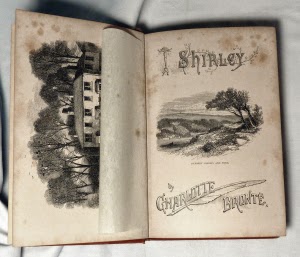
Shirley by Charlotte Bronte


Shirley is the least well-known, the least liked and the least written about of Charlotte Bronte's works.Published in 1849 a year after the hugely successful Jane Eyre it suffered then, as now, from readers expecting another Jane and suffering disappointment. Intended to be different, to be a social and political novel, Charlotte warns her readers on the first page to expect 'something as unromantic as Monday morning, - not exactly a truthful declaration.

The strongest criticism has been - it has too many themes that go nowhere, no real story and no real focus. There is..

*History - Yorkshire in 1811/12 at the time of the Luddite riots . The Napoleonic War had left England deeply in debt, taxes were high and unemployment caused by wartime trade restrictions and embargoes, and the increasing use of labour-saving machinery in the textile mills left the working class artisans struggling to survive and unable to see any way out except through violence and disorder.

* Social history - a portrait of  Yorkshire habits and manners with many of the characters based on people Charlotte knew well. Curates and clergymen, mill owners and maiden spinsters, a governess and a tutor - the middle class 'haves' but what is lacking , and what would have tied in with the Luddite theme, is being taken into the life of the 'have-nots' - a working class family. That is kept at a distance and only in one brief passage is there a glimpse of of their misery.
"On his entrance his wife served out, in orderly sort, such dinner as she had to give him and the bairns. It was only porridge, and too little of that. Some of the children asked for more when they had done their portion - an application which disturbed William much."
* The Role of Women - particularly that of unmarried women, a future that even at 18 Caroline Helstone is already confronting..
" I have to live, perhaps till seventy years. As far as I know, I have good health, half a century of existence may lie before me. How am I to occupy it? What am I to do to fill the interval of time which spreads between me and the grave?"
It's a subject that Charlotte was passionate about and she takes every opportunity to climb on her soapbox and pour forth her feelings; to the extent she puts words into the mouths of her characters that you can't imagine them ever saying.

* Personal Relationships Robert Moore is a mill owner struggling to stay afloat. His cousin Caroline Helstone is in love with him but although he is attracted to her he knows he needs to marry money and sets his sights on the wealthy Shirley Keeldar but this lively young woman has her own ideas about marriage and is drawn to Louis, Robert's brother and her former tutor.

The growing friendship between shy Caroline and the spirited Shirley makes for delightful reading. Neither of them fit into the local society, their different personalities perfectly complement each other and both have something to give to and to learn from the other.

In the last part of the book the social issues fade into the background and the personal stories become the focus. If Charlotte was intent on happy ever after for everyone who can blame her considering her own circumstances.

She began writing Shirley in 1848 but laid down her pen when her brother, Branwell, died in September. Three months later Emily died and early in 1849 it became obvious that she would soon lose Anne as well. It was after Anne's death a few months later that she resumed writing Shirley, pouring out her grief in the chapter The Valley of the Shadow of Death. It is impossible to imagine such loss and the depths of pain and despair she must have felt.

I am not a critical reader so none of the criticisms bothered me one whit. I may be in a minority but I loved Shirley, loved all the different themes, the stunning descriptions of the landscape, the history and the people of Yorkshire. A real pleasure to read and a wonderful beginning to my journey through the English counties.

Related post - Shirley Country: A Visual Tour


Back to the Classics 2015 - person's name in the title.

Saturday, February 7, 2015

Shirley Country: A Visual Tour

Gomersal and the Spen Valley

" They looked down on the deep valley robed in May raiment; on varied meads, some pearled with daisies, and some golden with king-cups. Today all this young verdure smiled clear in sunlight; transparent emerald and amber gleams over it. On Nunnwood - the sole remnant of antique British forest in a region whose lowlands were once all sylvan chase, as its highlands were breast-deep heather - slept the shadow of a cloud; the distant hills were dappled, the horizon was shaded and tinted mother-of-pearl; silvery blues, soft purples, evanescent greens and rose shades, all melting into fleeces of white cloud, pure as azury snow, allured the eye as with a remote glimpse of heaven's foundations. The air blowing on the brow was fresh, and sweet, and bracing.
'Our England is a bonny island,' said Shirley,' and Yorkshire is one of her bonniest nooks.'

Shirley is set in the Spen Valley around the village of Gomersal in West Yorkshire. Six miles south of Haworth it was an area Charlotte knew well as her friend Ellen Taylor lived there at The Red House which is now a museum. In Shirley it is called Briarmains and is the home of the Yorke family.


The Red House, Gomersal, West Yorkshire

" It whitened the pavement in front of Briarmains ( Mr Yorke's residence), and made silent havoc among the tender plants in his garden, and on the mossy level of his lawn. As to that great tree, strong-trunked and broad-armed which guarded the gable nearest the road..."

" Those windows would be seen by daylight to be of brilliantly stained glass, purple and amber the predominant hues, glittering around a gravely tinted medallion in the centre of each, representing the suave head of William Shakespeare, and the serene one of John Milton."

A great many of the novel's characters were drawn from life, including the Yorkes who Charlotte based on the Taylor family she knew so well. If she thought she was safe in her anonymity she was mistaken and it didn't take long for the community to recognise themselves. Described as ' a large, gloomy censorious woman ' it is not surprising that Mrs Taylor took offence.

Also now a museum is the Elizabethan manor, Oakwell Hall, - Shirley's home, Fieldhead.


Oakwell Hall, Birstall, West Yorkshire

" If Fieldhead had few other merits as a building, it might at least be termed picturesque. It's regular architecture, and the gray and mossy colouring communicated by time, gave it a just claim to this epithet. The old latticed windows, the stone porch, the walls, the roof, the chimney stacks, were rich in crayon touches and sepia lights and shades. 


"Mr and Mrs Helstone were ushered into a parlour: of course, as was to be expected in such a gothic old barrack, this parlour was lined with oak: fine, dark, glossy panels compassed the walls gloomily and grandly."


" As to the mill, which was an old structure, and fitted up with old machinery, now become inefficient and out of date he had from the first evinced the strongest contempt for all its arrangements and appointments. His aim had been to effect radical reform.....

......He never asked himself  where those to whom he no longer paid weekly wages found daily bread; and in this negligence he only resembled thousands besides, on whom the starving poor of Yorkshire seemed to have a closer claim."

*****


Monday, February 2, 2015

Reading England 2015: Where to Next?

I finished Shirley by Charlotte Bronte and although I will still have one foot in Yorkshire as I write a post reading wise it's time to move on.

I have books set aside  for several of the counties that border Yorkshire but as I looked at them one in particular held
my attention. Every time I look at its cover I have the same thought - 'I bet that's a Grimshaw!' And so it turned out to be.

Waterloo Lake, Roundhay Park, Leeds - J Atkinson Grimshaw

John Atkinson Grimshaw (1836 - 1893) was a Yorkshire painter who I discovered back in 2012 when I was writing a post for The Tenant of Wildfell Hall. A connection to the Brontes which feels like a signpost showing me the way forward and a moment to remember a very happy day!

On holiday for a limited time and with other people's wishes to consider there often has to be a compromise and mine was Haworth or Scarborough? I chose the latter because it was tourist season and I had visions of hordes of visitors overrunning Haworth - I don't like crowds.

It was the most beautiful summer's day in Scarborough. Far below the sea glittered in the sun, the castle wall loomed on my left and the bells of St Mary's church were ringing for a wedding. Hard to believe that I'm here, sitting beside the last resting place of Anne Bronte and wishing I had brought flowers to replace the dead ones . Magical!
After my family managed to drag me away it was a short stroll to look over the other side of the harbour and a stop for refreshments at The Castle by the Sea. Gorgeous views, my first taste of elderflower cordial and egg sandwiches so freshly made the filling was still warm.

I wanted to have a look inside this unusual Victorian building and there beside the door was a plaque..


John Atkinson Grimshaw liked to spend his summers in Scarborough and had this house specially built to suit both his artistic needs and to accommodate his large family.He named it The Castle by the Sea from a Longfellow poem. Today it is an hotel and restaurant but inside there are many prints of his paintings on the walls and the interior still retains many of its original features like this beautiful door with the stained glass panels and the elaborately carved and tiled fireplace.


It was the sort of day that special memories are made of!

Back to the books. I am travelling to Westmoreland (now a part of Cumbria) and I'll be reading...

Helbeck of Bannisdale by Mrs Humphry Ward.

'written in 1898 it has as its theme the love between a man and a woman which tragically clashes with their personal beliefs.'

I'm looking forward to reading an author who was apparently very popular in her time but one I had never heard of before.

Wednesday, January 28, 2015

A Beautiful Interlude


"Irene sat down at the piano under the electric lamp festooned with pearl grey, and old Jolyon, in an armchair, whence he could see her, crossed his legs and drew slowly at his cigar. She sat for a few moments with her hands on the keys, evidently searching her mind for what to give him. Then she began, and within old Jolyon there arose a sorrowful pleasure, not quite like anything else in the world. He fell slowly into a trance, interrupted only by his hand taking the cigar out of his mouth at long intervals, and replacing it. She was there, and the hock within him, and the scent of tobacco; but there, too, was a world of sunshine lingering into moonlight, and pools with storks upon them, and bluish trees above, glowing with blurs of wine-red roses, and fields of lavender where milk-white cows were grazing, and a woman all shadowy, with dark eyes and a white neck, smiled, holding out her arms; and through air which was like music a star dropped and was caught on a cow's horn. He opened his eyes. Beautiful piece; she played well - the touch of an angel! And he closed them again. He felt miraculously sad and happy, as one does, standing under a lime tree in full honey flower.....
......'Beautiful!' he said. 'Go on - more Chopin.' "
Interlude: Indian Summer of a Forsyte


Thursday, January 15, 2015

2 for A Century of Books

The Vet's Daughter by Barbara Comyns

"...if she had been a dog , my father would have destroyed her."

 Alice lives with her cowed and frightened mother and her brutal, sometimes violent father (the vet) in a bleak London suburb. The only joy in her miserable home life are the stories her mother tells of her childhood in Wales.
After her mother's death and the arrival of a wicked stepmother Alice leaves home to care for the mother of a friend and there is hope that she will at last be able to lead a normal life and find happiness.

The Vet's Daughter has been on my Classics Club list since the beginning - I've read many posts about it and it's always intrigued me. After reading it I am reserving judgement on Barbara Comyns as I think I need to reread this one or try something else.
I loved the first part. Alice's narration has a unique voice, the writing is simple but wonderfully descriptive , the story is both heartbreaking and horrifying. It does have a fairytale quality and I wanted the happy ever after ending.
I began to feel unsettled .... " ...and I felt a strange homesickness for no home I'd known.'... when I read those words which gave me a sense of where the story was going and I only skimmed the end chapter so I could say I finished it.
Not the right time for me to read this.

The Classics Club
A Century of Books (1959)

Danger Point by Patricia Wentworth

Miss Silver is returning home from a holiday when a very distressed and frightened young woman jumps into the compartment of her train. Mrs Lisle Jerningham , a newly wed heiress has overheard a conversation that questions the circumstances of her husband's first wife's death and wonders how long it will be before Lisle herself suffers an 'unfortunate accident'.

A promising beginning which sadly never lived up to the promise. Lisle is such a passive and colourless heroine it's impossible to care about her fate and when it's obvious who the villain is.... only one thing is left. The pleasure of Miss Silver's company!
But she doesn't make another appearance until over halfway through the book and when she does takes very little part in solving the case. 
Disappointing! 

A Century of Books (1942)

Saturday, January 10, 2015

The Fortune of the Rougons by Emile Zola

translated from the French by Brian Nelson.

Published in 1871 The Fortune of the Rougons is the first book in Emile Zola's twenty volume Rougon-Marquart series. In the preface he writes..

"My aim is to explain how a family, a small group of human beings, behaves in a given society after blossoming forth and giving birth to ten or twenty individuals who, though they may seem at first glance totally dissimilar from each other, are, as analysis shows, linked together in the most profound ways. Heredity, like gravity, has its laws."

Set in the fictitious Provencal town of Plassans, which is based on Aix where Zola grew up, the present day events take place in 1851 with frequent flashbacks to earlier times.
Aix-en-Provence

A family of ' ravenous appetites'

The family story begins with Adelaide, daughter of the richest market gardener in the area and heiress to a considerable fortune after his death, a young woman ruled by her emotions and prone to hysterical fits. She offends public opinion by scandalously marrying one her servants named Rougon, a rough peasant. A year later he dies leaving her with a son, Pierre.
Very soon after Adelaide takes a lover, Maquart, a man of ill repute, a smuggler and poacher and 'rendered vicious with wine.' Two children are born, Ursule and Antoine.

By 1851 these children are all grandparents, the family is growing and the majority of them are quite dreadful people. Pierre has conned his mother out of her money and stolen his siblings share but still doesn't have the money and social standing he desires so much.

" The Revolution of 1848 found all the Rougons on the lookout, frustrated by their bad luck, and ready to use any means necessary to advance their cause. They were a family of bandits lying in wait, ready to plunder and steal."

With the rise of the Rougons Zola is mirroring the 1851 coup d'etat of Louis-Napoleon and the beginning of the Second Empire. Both of them founded in treachery and betrayal, murder and blood.

Not everyone is bad - within all the nastiness shines the story of the young lovers, Silvere (Ursule's son) and Miette.

Liberty Leading the People - Delacroix
Idealistic but naive Silvere is swept away by the visions of a perfect Republic and is determined to join the insurgents marching through Provence . Not wishing to be parted from him Miette takes on the role of flag bearer.
Zola's powerful descriptive prose is at its best in telling their story especially the quieter moments spent in the old cemetery ( where the book begins and ends) and out in the countryside.

I'm so glad I decided to stop reading Zola's  Rougon-Maquart titles randomly and begin to read in the order he recommended. I now have a family background and, having had little knowledge of French history after the Revolution, a better understanding of that era.

This edition includes an introduction, a translator's note, a bibliography and chronology of Emile Zola, explanatory notes, and a much-needed family tree.

A great start to 2015!

Tuesday, January 6, 2015

Ethan Frome by Edith Wharton

My Classics Club Spin 8# selection which I downloaded from Girlebooks which meant it was some time before I realised it was not the full length novel I was expecting but a novella of less than a hundred pages.

A novella of stunning beauty and simplicity.


In Ethan Frome Edith Wharton moves from the Gilded Age high society settings of The Age of Innocence and The House of Mirth to a rural village in New England. In her 1934 autobiography she explains..

"I had wanted to draw life as it really was in the derelict mountain villages.........a life utterly unlike that seen through the rose-coloured spectacles of my predecessors Mary Wilkins and Sarah Orne Jewett."

It is not a pretty picture. From wonderful wintry images of ice , snow and bitter cold the village of Starkfield emerges as bleak and dreary a place as its name suggests with a community physically, mentally and emotionally weighed down by the environment.
"Most of the smart ones get away".
Ethan Frome did get away - to college to study engineering for a short time before being called home to help his mother when his father died. After his mother's death he marries her caregiver, Zeena who soon retreats into a state of chronic illness. Several years later Zeena's cousin Mattie, a young girl left penniless when her father dies, comes to live with them as a housekeeper and nurse. Inevitably, Ethan and Mattie fall in love with tragic consequences.

It is emotional reading - sad and with an added sense of hopelessness that comes from knowing at the beginning that something terrible has happened. The narrator is a stranger staying in Starkfield who becomes curious about 'this ruin of a man' and what happened to him twenty-four years ago. It gives him a strong bias in Ethan's favour and it was only after finishing and not being able to stop thinking about it , that I went back and read it again. ( Easy to do with a novella).

Ethan Frome is a good man with a strong sense of obligation to take care of others but he's also a dreamer who imagines what might be, yet does nothing to actively make it happen. His indecisiveness and doing what other people want seems like taking the easy way out and is as much to blame for what happens as any 'cruel destiny'.

I did feel tremendous sympathy for Zeena and Mattie. What a terrible life for a woman particularly if there is no loving relationship to draw comfort from. It was from this desperation they both had the courage to make decisions even if they weren't always the right ones.

Brilliant! Loved it!

Sunday, December 14, 2014

Two More Challenges for 2015


The Goal - to read a minimum of six classics between 1 Jan - 31 Dec 1015 .

The Categories

1. A 19th Century Classic — any book published between 1800 and 1899.

2.  A 20th Century Classic – any book published between 1900 and 1965.  Just like last year, all books must have been published at least 50 years ago to qualify as a classic.

3.  A Classic by a Woman Author.

4.  A Classic in Translation.

The Kill by Emile Zola

5.  A Very Long Classic Novel — a single work of 500 pages or longer.

6.  A Classic Novella — any work shorter than 250 pages.

Where Angels Fear to Tread by E.M.Forster

7.  A Classic with a Person’s Name in the Title. 

Shirley by Charlotte Bronte 

8.  A Humorous or Satirical Classic.

9.  A Forgotten Classic.  This could be a lesser-known work by a famous author, or a classic that nobody reads any more.

Helbeck of Bannisdale by Mrs Humphrey Ward

10.  A Nonfiction Classic.  A memoir, biography, essays, travel, this can be any nonfiction work that’s considered a classic, or a nonfiction work by a classic author.

11.  A Classic Children’s Book.

12.  A Classic Play. 

For more info check out the link above.

*****


The rules of the Pre-Printing Press Challenge:
  1. All books must have come out before 1440, when the printing press was first invented.
  2. Books chosen for this challenge can overlap with other challenges.
  3. Books can be translated into the language of your choice.
  4. All the books you've chosen must be read by December 31, 2015.
  5. You can read 1-3 books, 4-6 books, 7-9 books or 10 or more books if you're feeling particularly ambitious.
  6. The choice of books is up to you. There are no set reading lists, and you don't have to set one when you join.
More info at above link

I am starting small with the two books that are on my shelf. 

Beowulf - Anonymous
The Book of the City of Ladies by Christine de Pizan

*****