Showing posts with label Historical Fiction. Show all posts

Thursday, April 30, 2015

Gentian Hill by Elizabeth Goudge

The Elizabeth Goudge Reading Week is hosted by Lory @ The Emerald City Book Review.

I have been in Devon this month so the book I chose to read by Elizabeth Goudge was Gentian Hill because it is also set in that county.


Mid 19th century Torquay

" There was no sound anywhere. Voices were stilled upon sea and shore and the white gulls with their gold-tipped wings floated silently. The half-moons of golden water, swung and withdrawn so rhythmically by the ebbing tide, creamed soundlessly upon the golden sand, and the tiny sound of the ripples lapping against the jetties and the hulls of the fishing boats was lost in the great silence.
Into this vast peace, this clear light, sailed the great ships...."

1803, the Napoleonic Wars, and the Royal Navy ships find a welcome respite in the sheltered waters of Torbay. On one such frigate a young midshipman is reaching the end of his endurance. Anthony Louis Mary O'Connell is 15 yrs old, an intelligent, sensitive boy raised by his grandmother until her death when he was taken on as a midshipman on a distant relative's ship. A harsh and brutal life and two months later the lure of the land is too much for Anthony and he deserts the Navy.
Assuming the name of Zachary he wanders the countryside in search of work becoming increasingly ragged, footsore and hungry.

Weekaborough Farm is the home of Mary, an orphan saved from a shipwreck and adopted by farmer Sprigg and his wife.
At the age of 10 she is 'an elfin child with the graceful movements a wild woodland creature, a fawn or a gazelle.'
Mary loves the animals and frequently raids the larder at night to secretly feed the cats kept outside. It is while she is in the barn one night that Zachary appears and the two young people instinctively recognise a kindred soul in each other.

Events see Zachary return to the Navy and Mary must wait patiently for his return. 

St Michael's Chapel
The story is a retelling of an old legend of a shipwrecked mariner who became a hermit and built the chapel high up the steep side of a hill. A place to pray for those who face the perils of the sea.

Elizabeth Goudge's deep love for the Devon countryside is obvious with her beautiful, often mystical descriptions of Nature which she balances with the down to earth telling of daily routine on a farm. The ancient customs and rituals - wassailing, harvesting and corn dollies, the ploughing chant and the bull roarer- fascinating stuff to learn about.

An enchanting blend of fact and fiction, of Pagan otherworldliness and Christian faith. It's so long since I read any of Elizabeth Goudge's books ( one exception) that I'd forgotten what a unique voice she has , and one that is hard to describe, except to say I loved it. I think Love is the theme in Gentian Hill  - the following quote is written on a scrap of paper and moves from character to character throughout the story.
"Love is the divinity who creates peace among men and calm upon the sea, the windless silence of storms, repose and sleep in sadness. Love sings to all things who live and are, soothing the troubled minds of gods and men."

Related post - Green Dolphin Country by Elizabeth Goudge 

Thursday, April 25, 2013

Lost Voices by Christopher Koch

" Late in life, I've come to the view that everything in our lives is part of a pre-ordained pattern. Unfortunately it's a pattern to which we're not given the key. It contains our joys and miseries; our good actions and and our crimes; our strivings and defeats. Certain links in this pattern connect the present to the past. These form the lattice of history, both personal and public; and this is why the past refuses to be dismissed. It waits to involve us in new variations; and its dead wait for their time to reappear."

After fifty years Hugh Dixon has returned to Hobart, Tasmania and as he wanders the suburban streets he reflects on the past - his early childhood and his schooldays in the 1940 - 50's.

When he is 18 his father, Jim, finds himself in serious financial trouble and even though Jim has been estranged from his family for a long time Hugh decides to approach his great-uncle Walter for help. 

Walter is a successful lawyer but lives alone at Leyburn Farm, the estate built by the Dixons who were among the early non-convict settlers in Hobart. Hugh's visit is the first of many. Walter recognises and encourages his artistic talent and takes pleasure in educating him in art and literature. He also tells Hugh of the family connection to a notorious 19th century bushranger, Lucas Wilson.

The second part of the story goes back to the 1850's and Hugh's great-grandfather, Martin. At dinner one evening the family is raided by two escaped convicts on their way to join Lucas. An aspiring writer, Martin sees an opportunity for an exclusive interview with the bushranger and persuades them to take him with them.

A former guardsman transported for striking a senior officer, Lucas Wilson is an educated and charismatic man who, in the wilderness beyond Hobart, is attempting to build a utopia; a community of equal opportunity which he calls Nowhere Valley. 

The third and final part returns to the 1950's and Hugh's work as an illustrator for a newspaper and his reunion with old schoolfriend, Bob Wall. When Bob is accused of murder great-uncle Walter is called in to help.

What ties the two narratives together are the repeating patterns: conflict between fathers and sons , young men in love with older women, good men and two very evil men.

Lost Voices is a book with so much detail it deserves to be read slowly. I have been to Tasmania and Chrisotpher Koch captures its  unique atmosphere, where reminders of its harsh and violent past stand in landscapes of great beauty, perfectly. 1950's nostalgia, art and literature, bushrangers and gunfights - so much to savour.

I loved it! The best historical novel I've read in a long time.

What's In A Name Challenge 6 ( lost or found in the title)


Australian Literature Month hosted at Reading Matters.


Tuesday, February 5, 2013

The Lady and the Unicorn by Tracy Chevalier

I've had this book fair buy sitting in the bookshelf for ages - obviously one of those impulse buys I didn't need. Sometimes I like this author, as in Remarkable Creatures, sometimes not so much and The Lady and the Unicorn sits somewhere between.

Jean le Viste, a fifteenth-century nobleman close to the king, hires an ambitious artist to design six tapestries celebrating his rising status at Court. A talented miniaturist, Nicholas des Innocents overcomes his surprise at being offered this commission when he catches sight of his patron's sumptuous daughter, Claude.

In Brussels, renowned weaver, Georges de la Chapelle, takes on the biggest challenge of his career. Never before has he attempted a work that puts so much at stake. Sucked into a world of temptattion and seduction, he and his family are consumed by the project and their dealings with the rogue painter from Paris.


There are multiple narrators, the aristocrats, the artists, the weavers,  each perspective allowing a picture of how the different social classes lived and the problems they faced, particularly the women. But for me the characters felt like cardboard cutouts chosen to fulfil those roles, they never came alive as real people and I had little interest in any of them.


What I did enjoy was the process of the creation of the tapestries.
From the first paintings to the final unrolling it was a fascinating and very interesting journey. I loved the details of the symbolism that everything added to the background has, the choosing of colours, wools and silks, the amazing talent of the weavers who created such beautiful work on their looms.

Good historical fiction which I'm sure many readers will love but didn't quite hit the mark for me.

Monday, September 17, 2012

Madame Proust and the Kosher Kitchen by Kate Taylor

Loved it!!

I think there is real pleasure in discovering a book randomly on the library shelves, being intrigued by the title and deciding to bring it home. There are no expectations based on other people's opinions and when it turns out to be a winner - what joy!

Madame Proust and the Kosher Kitchen is about three women whose stories criss-cross between Paris in the 1890's at the height of the Dreyfuss affair, France under enemy occupation in 1942, and present day France and Canada.

It begins in 1942 with the parents of young Sarah Bensimon desperately doing everything they can to get their little girl out of Paris. Eventually they succeed and Sarah ends up making the long journey to Canada and being fostered by a childless couple in Toronto. Marrying into an orthodox Jewish family, she takes refuge in her kitchen, creating kosher versions of classic French cuisine.

The narrator is a contemporary Canadian, Marie Prevost, who spent  her first thirteen years in Paris before returning to her father's home country. Speaking both French and English fluently she becomes an interpreter and after a disappointing love affair sets off to Paris to research Marcel Proust but instead she finds in the archives of the Bibliotheque Nationale the 'unpublished diary' of his mother, Madame Jeanne Proust.

Madame Proust and sons - Marcel and Robert
In the excerpts from her diary we find a Jewish mother who over-protects and over-indulges her eldest son. She worries about his health and his diet, his late nights and unsuitable friends, and despairs at his lack of enthusiasm for finding a career.
" Marcel speaks no more of the idea of a novel, thank goodness. These projects are only a waste of time."
Madame Proust not only records details of everyday domestic affairs and the well-known literary figures that visit her home, but also comments on what is happening in the world outside.......like the Dreyfuss affair and Emile Zola's inflammatory J'accuse.

Obviously well-researched it makes fascinating reading and I have to admit the diary was my favourite part of the book but I also enjoyed the stories of Sarah and Marie - something that doesn't always happen when an author moves between different time periods. 
Kate Taylor links the three women through life experiences big and small, the human responses that never change through the generations. The relationship between parents and children, the dinner menus Madame Proust describes and the French food Sarah cooks. Madame Proust takes a joy-ride on the new Metro - fifty years later Sarah does the same in Toronto. 

I loved it enough to want to know if Kate Taylor had written more and discovered that Madame Proust and the Kosher Kitchen won the 2003 Commonwealth Prize for best first fiction (Canada/Caribbean) as well as other Canadian book awards. That she is a Canadian author is an added, and unexpected, bonus as I can count this book into my Canadian Book Challenge total.

Related post - When One Book Leads to Another


Monday, September 3, 2012

The Outlander by Gil Adamson

" Pale foam rose from where her shoes sank into the mud. No more voices inside her head, no noise but these dogs. She saw her own course along the ground as a trail of bright light, now doused in the ditchwater. She clambered up the bank onto a road, her stiff funeral skirt made of bedspread and curtain, her hair wild and falling in dark ropes about her face. The widow gathered up her shawl and fled witchlike down the empty road."

It is 1903 - a young woman flees alone across the icy western wilderness of the Rocky Mountains. Bloodhounds track her through the trees. Half mad! Already a widow - by her own hand. Pursued by two relentless and vengeful brothers, she is forced to flee ever deeper into the mountains and away from civilisation.

The young woman has a name, Mary Boulton, but is referred to throughout as 'the widow'. Strange and I found it a bit irritating.

The writing is simple but beautifully evocative with a great many  descriptive phrases and lyrical paragraphs that bring alive the vast  mountain wilderness and the small mining community that provide the setting. But..... at times it was too much and overpowered the story.

I had to stop thinking of it as an adventure thriller which is what the synopsis suggests it is. With its slightly haunting and unreal atmosphere it seemed to me more like the retelling of a myth , a tale of a mad murderess that has been handed down the generations.......I liked it more reading from that perspective.

As she runs the widow reflects on her life and we learn of her upbringing, her marriage, and the circumstances that led to her taking her husbands life.

And along the way, a number of memorable characters come to her rescue in the nick of time. Cowboys and Indians, a solitary mountain man who saves her from starvation in the mountains, a preacher and a dwarf storekeeper when she eventually comes to the mining town of Frank.

I didn't like the ending!

Unusual and original, beautiful writing, interesting characters and historical background - I liked and enjoyed it but small inconsistencies prevented me from loving it.

Canadian Book Challenge 6


Thursday, August 30, 2012

Random Passage/Waiting For Time by Bernice Morgan

Hard to believe it was so long ago but it was in 2010 I first heard mention of this book through a review by Sarah @ Reading from the Past and added it to my TBR. It's taken the Canadian Book Challenge to spur me into finally reading it.

Random Passage is a novel about the early settlers in one of Newfoundland's isolated coastal areas and the fictional Cape Random is based on a real community in Bonavista Bay where the author's mother grew up.

The story begins in England in the 1820s.... when son Ned is accused of stealing the Andrews family is forced to leave England in a hurry and take passage on a ship to the New World. At the end of the journey they find themselves put ashore onto a cold and barren land occupied only by a taciturn storekeeper and one other family. For seventeen-year-old Lavinia it seems a fate worse than death and to ease her loneliness she soon begins a journal in which she records the small community's daily lives.

I've read many pioneering stories but this has to be the most harrowing and one can only wonder at the incredible endurance and will to survive these people must have had. Close to death from starvation every freezing winter, struggling to build homes and grow food and dependent on the sea for the fish that could be exchanged for the supplies they needed.

A tiny community but the characters were diverse and interesting and the group had its share of conflicts and intrigues, joys and sorrows. I really enjoyed it and as it has a cliffhanger ending so I was keen to keep reading and went straight on to the sequel...

Waiting for Time

Disappointed! Instead of returning to Cape Random the sequel begins in present day Ottawa (1980s) where Andrews descendant, Lav works for the Fisheries Dept. After being transferred to Newfoundland she discovers the first Lavinia's journal and begins to learn of the family she has never known. Additions were made to the journal after Lavinia's death by Mary Bundle, a young woman who arrived at Cape Random soon after the Andrews.

The middle part of the book tells Mary's early story and through her eyes the same events Lavinia wrote about are told from a different perspective. Interesting but sometimes repetitive.

I didn't enjoy Waiting for Time as much as Random Passage. It seems that originally it was intended to be one book and I would have preferred one chunky generational saga. The continuity of the family lines was lost in the sequel and even with the help of a family tree, which I had to keep referring to, I found it difficult to figure out who was who. 

Overall, I did enjoy it, especially the history as I know very little about Newfoundland, and like all good historical fiction should, it has left me wanting to explore further.

The Canadian Book Challenge 6 


Wednesday, August 1, 2012

The Gods of Gotham - Gone Girl

These two books have had plenty of attention so I'll just give them a quick mention..............loved them both!


The Gods of Gotham by Lyndsay Faye

New York City, 1845.......when a fire wipes out his home, his savings and his workplace, Timothy Wilde  becomes a 'copper star', a member of the newly formed police force. He is assigned to the Sixth Ward, a poor area where crime is rampant and the ever-growing number of immigrants struggle to survive, and soon becomes involved in the hunt for a child killer.

I have to confess I saw this book on the library shelves several times but never got further than the title. The only thing I associated Gotham with was Batman so I was sure it wouldn't be for me. Last month I picked it up and the blurb on the back convinced me to give it a try........and it was fantastic! 

I loved the writing - the author has a wonderfully descriptive turn of phrase that made the sights, sounds and smells of 19th century New York very real. I had much to learn about the politics and corruption within the city and those real excerpts from newspapers and articles of the time at the beginning of the chapters were chilling. I had no idea that the feeling against Roman Catholics was so strong.
I enjoyed the central crime story but it was the historical background that made reading The Gods of Gotham so worthwhile.
I recommend!


 Gone Girl by Gillian Flynn

 On the morning of his fifth wedding anniversary, Nick Dunne's wife Amy suddenly disappears.


These days I tend to avoid overly-hyped titles but I am a lover of psychological suspense stories so this one did intrigue me. I was fortunate that the first mention of it in Google reader was a post from a blogger who suggested the less one knows about Gone Girl before reading, the better. Excellent advice that I'm glad I listened to, I ignored all reviews and for once the hype didn't lead to disappointment.

Dark, twisted and diabolically clever. A first rate psychological suspense thriller that will keep you guessing all the way through!
Enough said! Loved it!

Tuesday, July 24, 2012

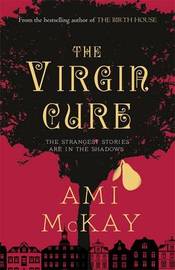
The Virgin Cure by Ami McKay

" I am Moth, a girl from the lowest part of Chyrstie Street, born to a slum-house mystic and the man who broke her heart..."


So begins Ami McKay's second historical novel set in the dark streets of New York's lower Manhattan. A world of poverty and hunger, peopled by pickpockets, thieves, beggars and prostitutes and not the best place to raise a young girl. By the time Moth is twelve she is already learning to exploit her femininity in return for food until her mother sells her as a servant to a wealthy woman.

Unfortunately Moth's new mistress is a cruel woman who delights in abusing her and this eventually leads her to run away which leads her into the murky depths of the Bowery. She meets Miss Everett, the owner of a brothel known as 'The Infant School' where young girls are trained in the art of charming a man until their virginity is sold to the highest bidder.

It is here that Moth is befriended by Dr Sadie, a woman physician who cares for the girls, who teaches her that there are other options and choices she can make that will lead her to a better life.

Most of the story is narrated by Moth who is a delightful character, spirited and determined to be independent and sometimes it's hard to remember she is only a child. A different perspective is given through excerpts from Dr Sadie's journal which gives a fascinating glimpse into the life of a 19th century woman doctor. This was so interesting particularly knowing that Sadie was based on the author's great-great grandmother and was the inspiration for writing the book.

I loved all the bits and pieces in the margins and at the beginning of chapters- advertisements and snippets from contemporary publications , fashion descriptions and song lyrics - they added so much to creating a wonderfully vivid feeling of the time.

Excellent historical fiction - I loved it - even though the harsh realities of life for the lower class masses that the story reveals often make for sad and horrifying reading - and highly recommend!


Canadian Book Challenge 6


Monday, June 11, 2012

An Impartial Witness by Charles Todd

This weekend I took a break from reading Victorian and whizzed through the second book of this series featuring amateur sleuth and WWI nurse, Bess Crawford. I read the first A Duty to the Dead earlier this year.

It is the summer of 1917 and once again Bess has returned to England from the trenches of France with a group of severely wounded men, including a pilot who clings to a photo of his wife. While passing through a London train station, Bess notices a woman bidding an emotional farewell to an officer. Then she realizes that it is the woman in the photo, but the man is not her husband.
Back in France, Bess learns that later on that same day ,the woman had been murdered. Granted leave to talk to Scotland Yard, Bess's natural curiosity soon has her caught up in the hunt for a killer.

Easy, relaxing reading with a mystery that has a sad story at its heart and enough twists to keep this reader's attention. 
The story follows Bess as she moves between France and England - I did think she seems able to get leave from her duties a bit too easily!

I've always appreciated the ability the American mother/son author duo has in creating a wonderfully atmospheric English background and An Impartial Witness is no exception. Whether it's the damp, foggy streets of a London or a village fete I can imagine the surroundings and enjoy the glimpse of British life of the era.
So I was a little disappointed that the parts set in France didn't have the same effect and left me feeling detached from, what I imagine,  the horrors of a WWI field hospital were really like. And I'm sure Bess's experiences would result in more than her feeling 'a bit tired.'

Minor quibbles - I still liked it enough to know I'll read the next in the series.


Thursday, May 31, 2012

Ride For Rights by Tara Chevrestt

" Women can aid the war effort by darning socks and packing care packages, but they do not belong on motorbikes," a man to Angeline's right loudly declared.
"What a ridiculous notion! All the motorcycles would crash, all the women would be killed, and the information would end up in the wrong hands." 

In the summer of 1916 American women do not have the right to vote, let alone be motorcycle dispatch riders. The Hanson sisters, Angeline and Adelaide, are determined to prove to the world that not only are women capable of riding motorcycles, but they can ride them across the United States. Alone!
From a dance hall in Chicago to a jail cell in Dodge City, love and trouble both follow Angeline and Adelaide on the dirt roads across America. The sisters shout their triumph from Pike's Peak only to end up lost in the Salt Lake desert. Will they make it to their goal of Los Angeles or will too many mishaps prevent them from reaching their destination and thus, hinder their desire to prove that women can do it?

I very seldom read Young Adult books but I do like historical fiction and particularly historical fiction based on real people who I haven't previously heard of.
Ride for Rights is a fictionalised account of the Van Buren sisters, Augusta and Adeline, New York society girls who exchanged their fashionable dresses for breeches and leather helmets , took on the challenge of mastering heavy Indian Model F motorcycles and riding them 5000 miles over hazardous roads ......pioneers for Women's Rights.

The narrative of the story , interspersed with excerpts from Angeline's diary and contemporary newspaper reports , is fast-paced and has a wonderful 'girls can do anything' energy and I particularly enjoyed the appearances of other well-known names like Amelia Earhart and the Astaires . The author includes explanatory notes at the end which saves any confusion about what is fact and what is fiction.

Ride for Rights is the sort of book I read and loved as a young girl and which fostered a lifelong love of historical fiction. It's fun, it's an adventure, it's informative and its heroines are an example of independence and having the courage to follow your dream.
I enjoyed it immensely!


Thursday, May 3, 2012

The Uninvited Guests by Sadie Jones

The Titanic centenary and the success of Downton Abbey seem to have released a deluge of books set in the Edwardian and WWI eras and enough of them have come my way to make me feel I've reached the point of saturation.
So a story set in that time now has to have something different and creative to hold my attention and The Uninvited Guests does just that!


Downton Abbey - but not as you know it!

The story, which takes place over the course of one day, begins on an April morning in 1912 and is set at Sterne, a rundown country manor purchased by Horace Torrington who then, unfortunately, died suddenly leaving heavy debts and his family facing the loss of their home. Charlotte his widow has since remarried Edward Swift, a man her three children Emerald, Clovis and Smudge dislike. On this April morning Edward is leaving for Manchester to try and raise a loan to save Sterne.

At home the preparations are beginning for the elegant supper party to be held that evening in honour of Emerald's twentieth birthday. While the family outwardly attempts to keep up appearances their financial difficulties mean they have to make do with only two servants who must fill every role from cook to lady's maid and the normally rigid divide between upstairs and downstairs becomes rather blurred.   

I really enjoyed this first part of the story. It has a lightedhearted and comic tone that gently pokes fun at Edwardian upper class pretensions and the attention to period detail  provides a fascinating glimpse of everything from the kitchen to the boudoirs.

Then news is received that there has been a terrible train accident a few miles away and Sterne must offer  refuge to survivors until the railway authorities can send help. Eventually a bedraggled group of third class passengers appear and are unceremoniously bundled into a cold room, given a complimentary cup of tea and left to their own devices . Except for one first class passenger who is determined to join the evening's festivities and cause as much trouble as he can. Then there is the youngest daughter, Smudge, who takes advantage of the chaos to proceed with her Great Undertaking. 

With the presence of the uninvited the mood of the story changes.It becomes darker, quite sinister and spooky and increasingly bizarre with the surreal feeling of a strange dream . 


I loved it! Very original, a deliciously witty commentary on Edwardian manners and attitudes, a ghost story and a clever foretelling of the future.

Monday, April 23, 2012

Clara Callan by Richard B. Wright

"A masterpiece and one of my all-time favourites." 


That's a quote from Debbie @ ExUrbanis who recently featured on Alyce's 'Best and Worst of' meme. I had never heard of Richard B Wright or this book but the recommendation was enough to send me searching , and finding, a copy in the library. Now having read it I would have to agree with her sentiments.


Set in the latter half of the 1930's it is the story of two sisters, Clara and Nora Callan who have been raised in a small Ontario town. Following the death of their father,  Clara, the quieter and plainer sister, continues to live in the family home and teach school although deep down she longs for romance and adventure. Nora, an aspiring actress, escapes to the bright lights of the big city, New York, where she eventually lands a starring role in a radio soap, a romanticized drama of supposedly small-town life, while back home Clara lives the reality of petty gossip and old -fashioned attitudes.

The story is told through the letters Clara writes to and receives from her sister with the occasional addition of letters from others, and excerpts from her personal journal. It's a moving and emotional picture of life - the everyday routines and the larger events which change and shape a person forever.
  
In the background, a vivid and detailed portrait of the 1930's, when people found escape from the Depression through radio and the movies, when the Dionne quintuplets made the headlines and a worldwide sigh of relief was heard when Neville Chamberlain announced 'there will be peace in our time'.

Clara records in her journal the music she plays and listens to, the movies she goes to on Saturdays and the books she reads.There are lots of lovely literary allusions and I particularly loved this first one which shows how very different the sisters were.
" Went to a big bookstore on Fifth Avenue and bought cheap but good copies of Keat's letters, Boswell's Life of Johnson, a collection of Heine's poetry and A Brief History of Modern Italy.Nora bought a copy of Gone With the Wind, the Civil War novel that, according to her, "everyone in New York is reading." It would certainly appear so judging from the bookstore windows which are filled with copies."
And this one which sent me scurrying off to download it to my Kindle.
" .... but the book I loved the most was Turgenev's A Sportsman's sketches. It's odd in a way, for it seems to be a man's book: a rich idle landowner walks about the Russian countryside with his dogs, hunting wild fowl and talking to the peasants a hundred years ago, but Turgenev's style is so wonderfully lyrical in these stories."
It's a multi-layered book touching on many interesting and thought-provoking issues of the time. I was engrossed from the first page, could hardly bear to put it down and was sad to turn that final page.

A beautiful book - I loved it!


Tuesday, April 3, 2012

Foal's Bread by Gillian Mears

'It is a love story of impossible beauty and sadness, a chronicle of dreams 'turned inside out', and miracles that never last.'

I shudder when I think of how very close I came to giving up on this book. For a hundred pages I struggled with a writing style I wasn't sure I liked and dialogue I found jarring - a strange way of speaking that dropped 'the' and 'a'. But I was  caught up in the story of 'the girl with a boy's name' and very soon I fell under the spell of the simple but beautiful, poetic prose.

Set in rural New South Wales, Australia the story begins in 1926 when Noah/Noey is 14 and on the road with her drover father. Alone one evening, she undergoes a traumatic experience and the choices she makes will haunt her for the rest of her life.

Noey is a talented horsewoman and rides in high-jumping events on the show circuit. Here she meets and later marries Roley Nancarrow, Australia's top show jumper, and the couple move in with Roley's parents and sisters at One Tree Farm with big dreams of the horses they will breed and ride to success. 

Interweaving gorgeous descriptions of the landscape with the day to day practicalities of farming life the story follows the Nancarrow family through two decades of changing fortunes. It's not always easy reading as the author touches on many sensitive issues and I doubt there will be any reader who won't feel a connection to their own life experience among them.

The characters are very human - they have flaws and failings including an inability to communicate their true feelings. There were times I so disliked Noey, her behaviour and the ways she chose to express her despair and anger , yet I could still understand what drove her to it.

Painful , sometimes cruel, and achingly sad, Foal's Bread made an intense emotional impact and is the best book I've read so far this year.
  

Saturday, March 17, 2012

The Year After by Martin Davies

December, 1919.......Tom Allen has taken his time returning to England after five years fighting in France. He is one of the 'lucky' few who emerged physically unscathed although he carries the inner scars of what he has been through and the heavy burden of being a survivor.

Uncomfortable and unsettled in London he accepts an invitation to spend Christmas at Hannesford Court, the country house where he spent many summers before the war and to which he had vowed he would never return. 

It's almost as if nothing has changed. Cards in the library after dinner. The Boxing Day shoot. The New Year ball. Margot!

And Tom has not forgotten the German professor who died suddenly that last year. He begins to question: during all those years observing the glittering life of the owners of Hanneford, how much did he really see or understand? 

The Year After has a mystery at its heart but it is also a very moving story about love and loss. About a nation of people suffering from shock and grief in the immediate aftermath of WWI. Of survivors struggling to maintain things the way they have always been and not yet comprehending that can never be. 
The author's beautiful evocative prose captures perfectly the sunshine and roses, the lighthearted gaiety of the summer of 1914 and contrasts it with the bitter cold and icy landscape of the winter of 1919.
The villagers and the guests gathered at Hannesford for Christmas reflect the attitudes and opinions of different sections of society..
" 'Those of us who went out there want to forget all about the blasted war. Those who stayed here are determined not to let anyone forget it. Suddenly all the men who died are heroes, but the ones who came back are ungrateful fellows who get a bit moody and a bit awkward and rather let the side down.' "
" 'He (the Vicar) doesn't want Hannesford to have its own memorial to the fallen.''The vicar wants to spend the money on the village school. You know the sort of thing.Education for the children of heroes.' "
" ' My generation of young women find themselves in peculiar circumstances. A very large number of us will never marry. We may as well be frank about the situation. It is a simple question of mathematics.' '
" ' Did you notice all those photographs, Anne. When we went around the village on Christmas Day? A picture on every mantelpiece, the same in every village around the moor, like a thousand tiny lights still burning.' "
Compelling and emotional reading! I recommend.


Saturday, March 10, 2012

A Duty to the Dead by Charles Todd

At the outbreak of WWI, independent-minded Bess Crawford follows in her officer father's footsteps and volunteers for duty. She serves in the nursing corps and goes from the battlefields of France to the doomed hospital ship Britannic. On one voyage she grows fond of the young, gravely wounded Lieutenant Arthur Graham and promises to deliver a message to his brother after his death.

But when Bess arrives at the Graham house in Kent, Jonathan Graham listens to his brother's last wishes with surprising indifference. Unsettled by this, Bess is about to take her leave when sudden tragedy envelops her. She quickly discovers that fulfilling this duty to the dead has trust her into a maelstrom of intrigue and murder that will endanger her own life and test her courage as not even war has.


A Duty to the Dead is the first in the series featuring Bess Crawford by the American mother/son duo who write as Charles Todd. I've enjoyed several of the Ian Rutledge series and am always surprised at how well they create such an evocative English atmosphere.

Bess Crawford is one of the new type of women who would emerge after WWI. She's practical and independent and perfectly capable of looking after herself. She becomes involved in the mystery surrounding Arthur Graham's brother, not because she has any desire to be a sleuth but from a natural curiosity and a strong  dislike of injustice.

The story begins with the sinking of the Britannic which leaves Bess with a broken arm, symbolic of so much  that has been broken, physically , mentally and emotionally. In the quiet Kentish village she visits, the occupants mourn the fathers and sons who will never return and struggle to cope with the maimed and shell-shocked victims who have come back. The vicar ....
"...mended his church because he couldn't mend the broken lives and minds brought to him for comfort."
 I really liked the historical background and the many secondary characters who added depth and interest to the story. The mystery had enough twists to hold my attention - easy, pleasant reading and I enjoyed it.


Wednesday, February 29, 2012

Clarissa in February

JoAnn @ Lakeside Musing and Terri @ Tip of the Iceberg are hosting a year long group read of Clarissa by Samuel Richardson.
Clarissa is an epistolary novel composed of 537 letters dated from January 10th through to December 18th. The plan is to read the letters around their corresponding dates.  
Two months gone and we still have only read 11 letters which means sometime soon we're going to be swamped in a deluge of correspondence. February's letters didn't begin until the 20th - it was a long wait! 


Clarissa spent three weeks with Anna before being very suddenly collected and brought home because her family had learned that Lovelace had been calling on the Howes. She writes to Anne of the cold, accusing reception she received on her return and worst of all "They have found another lover for me; an hideous one! -- Yet he is encouraged by every body." 
Mr Harlowe is adamant that he 'will be obeyed' and is deaf to Clarissa's pleas to be heard. 


That women had no voice in matters like this is clearly revealed in Clarissa's letters. Her mother and aunt are too intimidated to even open their mouths and although Clarissa is still young enough to try no one listens. The whole nasty situation has been orchestrated by James who definitely has a voice and it is Mr Harlowe's behaviour that I find most appalling in allowing himself to be so influenced by his son.  

Clarissa is forbidden to go out, have visitors or even correspond until she agrees to marry Mr Solmes but in her last letter lays out a plan to Anna as to how they can secretly write to each other.

The final letter is Anna's reply and I do like the way Samuel Richardson is able to convey a very different personality in the tone of the writing. Anne sounds a lighter and brighter girl - her thoughts often way ahead of her pen as she dashes from one thing to another. I sense she is loving the drama of being part of a romantic intrigue which is only natural if everyday life is rather dull. She's also perceptive enough to see that Clarissa's feelings for Lovelace go deeper than she realises ....and warns her...
"But, O my friend, depend upon it, you are in danger. Depend upon it, whether you know it or not, you are a little in for't. Your native generosity and greatness of mind endanger you: all your friends, by fighting against him with impolitic violence, fight for him, And Lovelace.... (has seen)....it doing for him more effectively than he could do it for himself."
 Looking forward to March and hopefully there will be more letters to read next month.


Thursday, February 23, 2012

An Honourable Man by Gillian Slovo


It is 1884. General Gordon stands on the roof of his fortress in Khartoum as the city is besieged. At his side is the boy, Will, he rescued from an English dockyard slum - his reluctant last ally.
General Gordon was sent to the Sudan by the British Government to oversee the evacuation of Egyptian soldiers and civilians caught up in the revolt but has vowed to fight to the end despite disapproval towards his actions from England.

Approaching with the Camel Corps is a young doctor who has joined the expedition to rescue Gordon. As the men make agonising progress across the desert, John Clarke struggles to be the hero of his imagining, while thoughts of Mary, the wife he left behind, trouble his conscience. 

Back in London controversy rages over the expedition  fueled by a campaign of support led by the editor of the Pall Mall Gazette, W.T.Stead. the 'father' of tabloid journalism. Newspaper clippings of letters to the editor from 1884/5 are used throughout the story , an original touch that adds interest to the historical background.

Meanwhile, Mary , resentful of her husband's desire for adventure and completely at a loss without his presence around which her life has previously revolved, becomes increasingly dependent on laudanum to get her through each day, an addiction that will eventually lead her into London's darkest corners.

The story is told from three perspectives - Will, John and Mary - with each individual providing an opportunity to explore themes from politics and military campaigns to the conditions of Victorian women. The author ties them all together very skillfully by focusing on the human experience -all of the characters are united by finding themselves in an unfamiliar environment in which they feel isolated and alone. As a civilian doctor John struggles to find a place in the army corps yet has to share the suffering caused to the troops by leaders who demand the men ride camels and issue leaking water bags. Young Will starves and despairs as he watches General Gordon losing his mind and Mary's need for laudanum drives her from the home that has become a prison into the slums of London.

Moving between the menacing, fog-filled streets of London to the blazing heat of the African desert Gillian Slovo really captures the atmosphere of her locations with a  writing style that is straightforward and very easy to read . An excellent historical novel and one I enjoyed very much.

Royal Reviews Regency & Victorian Challenge


Wednesday, February 22, 2012

The Grand Babylon Hotel by Arnold Bennett


The Grand Babylon Hotel


Situated discreetly down a side street on the Embankment of London, the Grand Babylon is an exclusive establishment that caters to the wealthy and titled. It is ruled by the three gods - " Jules, the headwaiter, Miss Spencer, the bureau clerk, and, most powerful of all, Rocco, the renowned chef " - and if there is one type of guest they completely abhor it is rich Americans.

When multi-millionaire American , Theodore Racksole and his daughter , Nella, come to stay the sparks begin to fly. It is Nella's birthday and she requests a filleted steak and a bottle of Bass for dinner, an order that Jules and Rocco take great pleasure in refusing. To solve the problem Theodore promptly buys the hotel but soon after strange things start happening. A German prince fails to arrive, Miss Spencer disappears, a young man attached to the prince is found dead........and the body also disappears. With the help of a nephew of the prince, Theodore and Nella set out to solve the mysteries.

What follows is a good old-fashioned detective adventure with a touch of romance thrown in . Highly improbable scenarios, nasty villains, kidnappings, secret passages with spyholes and lots of danger and lucky escapes make very entertaining and amusing reading.
Considering it was written and first published, in serial form, in 1902 I was impressed with Arnold Bennett's heroine. Nella is no timid Edwardian mouse , and although indulged and spoilt by her father, is a very independent and straight talking young woman who has no qualms about setting off alone in search of clues and waving a revolver in the faces of suspects.

Fun! I enjoyed it!